
Dispensary menus have changed. THC percentage is no longer the whole story — and if you've been ignoring the terpene section, you've been missing the most useful part.
Walk into H.E.M.P. right now and look at our flower menu. You'll see THC and CBD percentages, sure — but below that, you'll find a row of words that most people skip right past. Myrcene. Limonene. Caryophyllene. Maybe a few others.
Most customers don't ask about them. That's starting to change, and for good reason: people who shop by terpene profile are way more likely to come back saying "that was exactly what I was looking for." People who shop purely by THC number are way more likely to come back saying "it was fine, I guess."
So here's what you actually need to know.
What Terpenes Are (And Aren't)
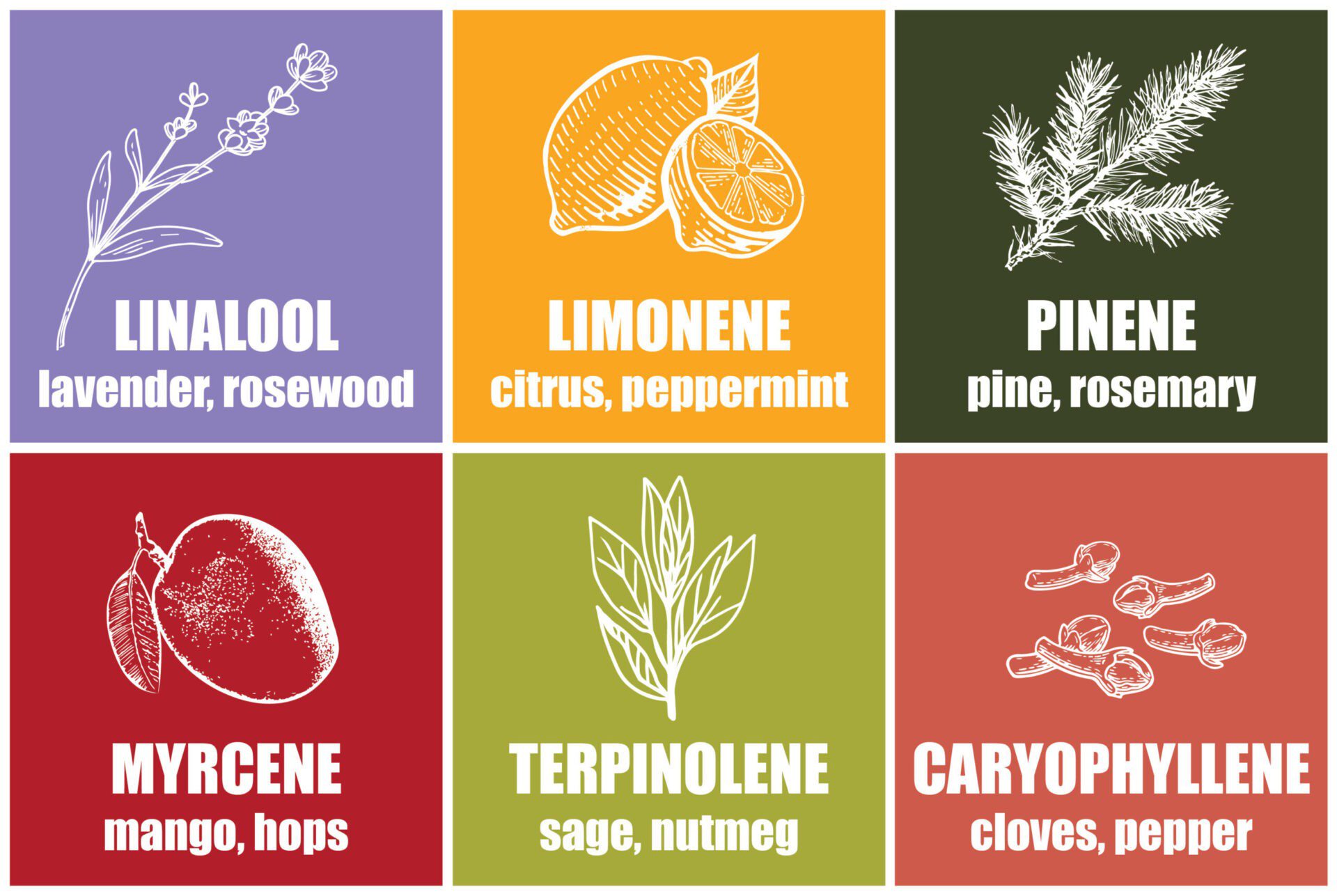
Terpenes are the aromatic compounds that give cannabis — and most other plants — their smell. Limonene is in lemon rinds. Linalool is in lavender. Pinene is what pine forests smell like. Cannabis just happens to produce an unusually diverse combination of these, which is why two strains sitting next to each other on a shelf can smell completely different.
They are not THC. They won't get you high on their own. But there's solid pharmacological research suggesting they interact with the endocannabinoid system in ways that can shape your experience alongside cannabinoids. The concept has a name — the entourage effect — and while it has real preclinical backing, it's still being studied in humans. We're not going to overclaim it. What we can say is that customers who pay attention to terpenes consistently find products they like better.
Cannabis has over 150 identified terpenes. You don't need to know most of them. Here are the six that actually show up in meaningful amounts and are worth understanding before your next dispensary visit.
The Six That Matter
Myrcene
Smells like: earth, musk, a little herbal
Myrcene is in almost everything. It's the most abundant terpene in cannabis by a significant margin, and it's associated with that heavy, body-settling feeling a lot of people describe in indica-leaning products. If you've ever had a strain that just put you on the couch without you planning for it, myrcene was probably doing a lot of the work.
You'll find it dominant in OG Kush, Granddaddy Purple, Wedding Cake — most of the classic heavy hitters.
Limonene
Smells like: citrus, lemon peel, brightness
Limonene is one of the better-studied terpenes and has more human trial data behind it than most. One study found that d-limonene specifically reduced THC-induced anxiety, which is interesting for anyone who's had a session go sideways. Generally associated with mood lift and daytime-friendly energy.
Shows up heavily in Mimosa, Super Lemon Haze, Durban Poison. If a strain smells like you could squeeze it, it's probably high in limonene.
Caryophyllene
Smells like: black pepper, spice, clove
This one is genuinely unique. Beta-caryophyllene is the only terpene known to directly bind to CB2 receptors — the same receptors associated with inflammation and immune response — which technically makes it both a terpene and a dietary cannabinoid. Research highlights anti-inflammatory and stress-relieving properties more consistently than almost any other terpene.
GSC, Sour Diesel, Chemdog, Original Glue — if you've liked any of those, caryophyllene is part of why.
Linalool
Smells like: lavender, floral, gently sweet
Linalool works through the GABAergic system — the same pathway that calming medications target — which helps explain why lavender has been used for relaxation for centuries and why strains high in linalool tend to have a settling, almost sedating quality. Research published in Frontiers in Behavioral Neuroscience confirmed significant anxiolytic effects in preclinical models.
Evening use, sleep support, unwinding after a rough day. That's where linalool lives. Look for it in Lavender Kush, LA Confidential, Zkittlez.
Pinene
Smells like: pine, fresh air, clean
Alpha-pinene is the most abundant terpene in the natural world, not just cannabis. In cannabis, it tends to be associated with clarity and alertness — some researchers have described it as potentially counteracting some of the short-term memory effects of THC, though that research is still early. If you want to be functional, pinene-dominant strains are usually a safer bet than myrcene-heavy ones.
Jack Herer is the most famous example. Also shows up in Blue Dream and Trainwreck.
Humulene
Smells like: earthy, woody, faintly hoppy
Humulene is in hops — same family as caryophyllene, and they often appear together. It's one of the quieter terpenes in terms of how it presents, but preclinical research supports anti-inflammatory properties. The thing that makes it stand out is that it's associated with appetite suppression rather than stimulation, which is the opposite of what most people expect from cannabis.
Common in GSC, Sour Diesel, White Widow.
Why This Especially Matters for Concentrates
If you're buying live rosin or hash rosin, terpene preservation is literally part of what you're paying for. Solventless extraction — ice water and pressure instead of chemical solvents — keeps the terpene profile of the original plant far more intact than other extraction methods. Live rosin specifically is made from freshly frozen flower, which locks in volatile terpenes before they can degrade.
That richer, more complex flavor you get from a quality rosin versus a cheaper extract? Terpenes. BDSA's 2025 industry report showed live rosin sales up 8% year-over-year with SKU count up 11% — and a lot of that growth is coming from people who started understanding what they were actually tasting.
How to Use This When You Shop
Ask about the dominant terpene specifically, not just the strain name. Same strain, two different growers, can have noticeably different terpene expression depending on how it was grown, when it was harvested, and how it was cured. The batch-specific terpene percentage is more useful information than the name on the jar.
And store your stuff properly. Terpenes are volatile — heat, light, and air break them down. Glass, airtight, cool, and dark. Somewhere between 55–62% humidity if you're keeping flower around for more than a week or two. A mason jar in a drawer beats a plastic bag on a windowsill every time.
Common Questions
Do terpenes get you high? No. They're not psychoactive. But they may influence how you experience the session alongside THC and CBD.
Is the entourage effect real? There's real preclinical science behind it, and the mechanism makes pharmacological sense. Human trial data is still limited. It's probably real. It isn't fully proven yet. We'd rather tell you that than oversell it.
Why does the same strain smell different from different growers? Genetics determine what terpenes a plant can produce. Growing conditions, harvest timing, and curing determine what it actually produces. Two batches of the same cultivar can smell meaningfully different as a result.
Are terpenes listed on the label? Not always, but it's becoming standard — especially for premium and solventless products. In Washington, licensed labs test for terpenes and most quality brands include the profile on the label or the COA. If you don't see it, ask us to pull it up.
Come Talk to Us
Terpene menus don't mean much without someone to explain them. Our team at H.E.M.P. in Vancouver has been having this conversation with customers for years — if you come in and tell us what kind of experience you're looking for, we can usually point you toward the terpene profile that'll get you there faster than anything else on the menu.
We're on Broadway in downtown Vancouver, just off I-5. Our full menu is online with terpene data on in-stock products.
21+ or valid medical card required. Cannabis has intoxicating effects and may be habit forming. Consume responsibly.
Terpene-effect associations in this post reflect current pharmacological research, most of which is preclinical. This is not medical advice.
0 Comments