
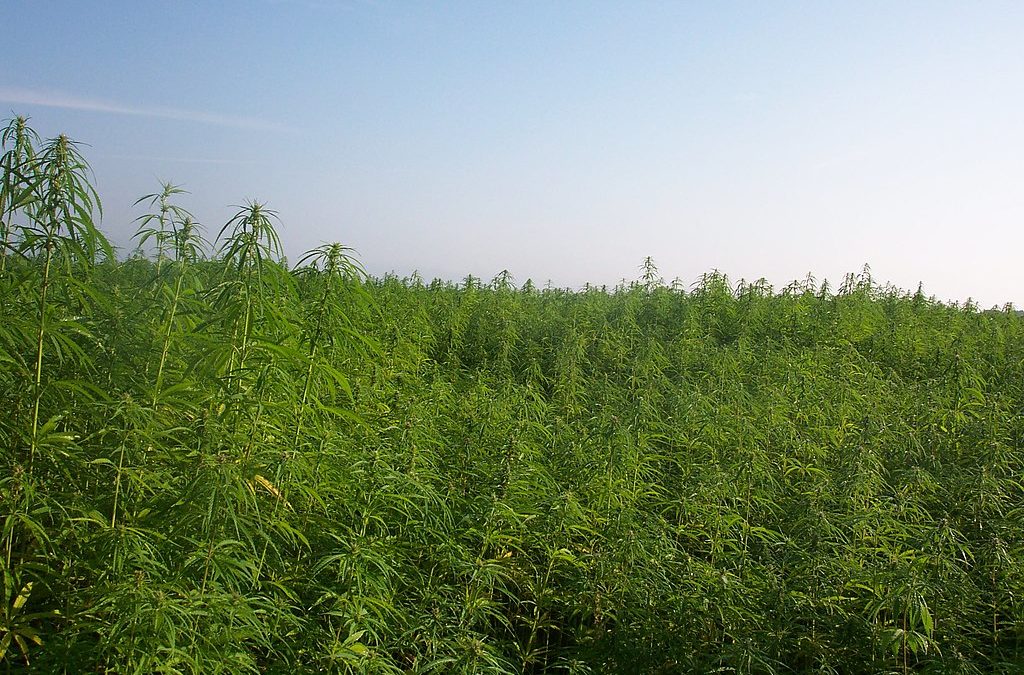
This month, one of the most significant policy shifts in recent cannabis history has begun sending shockwaves through the cultivation and manufacturing sectors. Under the newly passed federal spending bill, intoxicating hemp-derived products — such as delta-8 THC, delta-10 THC, HHC, and many hemp-based THC drinks and edibles — are set to be banned nationwide starting November 2026. The new definition of legal hemp effectively closes the loophole that allowed psychoactive hemp derivatives to be manufactured and sold outside state-licensed cannabis systems.
For anyone who shops at a dispensary, this change may initially seem distant. But behind the scenes, this single regulatory shift is poised to reshape farming practices, processing infrastructure, supply chains, and the economic outlook for both hemp and cannabis producers across the country.
Why Hemp-Derived THC Became So Widespread
Hemp-derived intoxicants exploded in popularity following the 2018 Farm Bill, which legalized hemp containing less than 0.3 percent delta-9 THC but did not explicitly address other cannabinoids created through chemical conversion. Manufacturers quickly discovered that CBD extracted from federally legal hemp could be converted into forms of THC through relatively simple processing, opening the door to THC-like products sold in gas stations, smoke shops, online stores, and sometimes even alongside licensed cannabis products.
This growth created a parallel intoxicant market worth billions — often unregulated, inconsistently tested, and completely separate from the state-licensed cannabis industry. For many farmers, it was a financial lifeline. When the CBD market oversaturated and prices crashed, converting CBD into delta-8 or delta-10 THC brought profitability back to hemp crops that would otherwise have gone unsold.
The new federal definition now eliminates that path.
How the Crackdown Impacts Farmers
Loss of a Major Revenue Stream
Hemp farmers have already faced years of instability. The collapse of CBD biomass pricing left thousands of growers with warehouses full of product they couldn’t sell. The rise of hemp-derived intoxicants revived the industry and created new demand for biomass. With the federal ban taking effect in 2026, that demand is expected to shrink dramatically.
Many farms that rely on converting surplus CBD into intoxicating cannabinoids now face a renewed threat of financial collapse. Without alternative markets, farmers may be forced to reduce acreage, abandon hemp entirely, or seek entry into state-licensed cannabis systems — a costly and heavily regulated transition.
Increased Pressure to Pivot
Some growers are preparing to pivot from intoxicating hemp markets toward other product categories, such as fiber hemp, grain hemp, or strictly non-intoxicating wellness cannabinoids. While these sectors hold long-term potential, infrastructure for processing fiber and grain hemp remains limited in many states, and market demand is far smaller than the THC or CBD industries.
Transitioning crops is not a simple switch. Farmers face challenges including:
- securing new genetics suitable for fiber or grain
- adjusting harvest timing and planting density
- finding processors and buyers
- managing razor-thin margins compared to cannabinoid hemp
Regulatory Uncertainty and Risk
Federal agencies themselves have acknowledged that enforcing the new ban may not be straightforward. Reports from congressional researchers note that agencies like the FDA and DEA may lack the resources needed for comprehensive enforcement. This creates a confusing environment where farmers must prepare for compliance without knowing how aggressively the new rules will be applied.
Uncertainty makes long-term planning difficult. Farmers may hesitate to plant hemp at all in 2026, which could sharply reduce overall acreage nationwide.
How Cannabis Manufacturers and Retailers Are Affected
Realignment of the Supply Chain
For years, hemp-derived intoxicants blurred the lines between hemp and cannabis. These products were often sold outside licensed dispensaries, undercutting producers who operated within state-regulated systems that require testing, tracking, taxes, and compliance.
With the ban approaching, manufacturers who relied on hemp inputs must decide whether to:
- shut down
- shift toward non-intoxicating goods
- attempt to enter regulated cannabis markets
- reformulate products using state-legal cannabis rather than hemp
Each path has significant financial consequences. Entry into regulated cannabis requires licensing, investment, and strict compliance protocols that many hemp businesses are unprepared for.
Market Consolidation
A contraction in the hemp intoxicant market will likely lead to consolidation. Larger, well-capitalized processors may absorb smaller competitors or vertically integrate into cannabis. Smaller operators may exit entirely.
For dispensaries, the shift means a more clearly defined product landscape. The disappearance of hemp-derived intoxicants may reduce confusion for consumers and create a cleaner separation between regulated cannabis and unregulated hemp products. State-licensed producers may also benefit from reduced competition, particularly in markets where hemp intoxicants had become widespread.
Long-Term Industry Outlook
Though disruptive, the federal crackdown may ultimately push the industry toward greater consistency and safety. State-regulated cannabis programs tend to require rigorous testing, standardized dosing, and tighter production protocols. Many industry experts argue that intoxicating cannabinoids should be produced within these frameworks rather than through the hemp loophole.
Still, the road ahead will be difficult — especially for farmers. The hemp industry has endured boom-and-bust cycles for nearly seven years, and this policy shift represents another major turning point. Success will depend on diversification, innovation, and improved infrastructure for non-intoxicating hemp categories.
Dispensaries will continue playing a crucial role by offering tested, compliant, state-regulated cannabis products. As hemp-derived intoxicants phase out, consumers may rely more heavily on dispensary-grade options, reinforcing their importance within the broader cannabis ecosystem.
Sources
Dentons. “Conflicting New Laws: Hemp and Cannabis in the 2025 Federal Spending Bill.” December 2025.
https://www.dentons.com/en/insights/newsletters/2025/december/2/us-cannabis-newsletter/cannabis-client-alert-week-of-december-1-2025
Newsweek. “Congress Rewrites Hemp Definition, Reshaping Cannabis Rules.” December 2, 2025.
https://www.newsweek.com/congress-rewrites-hemp-definition-reshaping-cannabis-rules-11162424
Cannabis Business Times. “FDA, DEA May Lack the Resources to Enforce New Federal Hemp Product Ban.” December 3, 2025.
https://www.cannabisbusinesstimes.com/hemp/news/15773558/fda-dea-may-lack-the-resources-to-enforce-new-federal-hemp-product-ban
Cannabis Science & Technology. “Pivoting with Purpose: How the Hemp Industry Can Navigate Federal Change.” December 2025.
https://www.cannabissciencetech.com/view/pivoting-with-purpose-how-the-hemp-industry-can-navigate-the-federal-change
Marijuana Moment. “Marijuana Regulations Protect Public Health Better Than Alcohol Rules, Government-Funded Study Finds.” November 2025.
https://www.marijuanamoment.net/marijuana-regulations-protect-public-health-better-than-alcohol-rules-do-new-government-funded-study-finds
The Guardian. “New US Seed Ban Risks Driving Cannabis Genetics Underground, Growers Warn.” December 6, 2025.
https://www.theguardian.com/society/2025/dec/06/cannabis-seed-ban-growers-warn
CannaTech Today. “Last Week in Weed: December 2–9, 2025.”
https://cannatechtoday.com/last-week-in-weed-december-2-9-2025