
Washington State has become one of the most influential regions in the legal cannabis industry, known for its regulated production system and wide variety of premium growers supplying dispensaries across the state. Among those producers, Sweetwater Farms has built a reputation as a craft cannabis cultivator focused on natural growing methods, terpene-rich flower, and small-batch quality. For many cannabis consumers visiting a dispensary in Washington, Sweetwater Farms products represent an example of the state’s emphasis on artisan cultivation and soil-based growing practices.
Sweetwater Farms is based in Cheney, Washington, and operates as a licensed Tier 2 cannabis producer and processor within the state’s regulated market. The company was established during the early years of Washington’s legal cannabis system and has focused on producing high-quality flower using traditional growing techniques. Their cultivation philosophy centers on growing cannabis in living soil rather than relying on synthetic nutrient programs commonly used in indoor commercial cultivation. This soil-based method allows microbes and organic nutrients to naturally feed the plants, which many growers believe can enhance terpene expression and overall plant health. The goal is to produce cannabis that is cleaner, more flavorful, and closer to how the plant naturally grows in the environment.
In Washington’s competitive dispensary market, growers often differentiate themselves through their cultivation approach. Sweetwater Farms has leaned heavily into craft cannabis principles, growing plants in small batches and maintaining hands-on control throughout the entire process, from cultivation to curing and packaging. This careful approach mirrors techniques seen in craft beer or boutique wine production, where small-scale attention to detail can create distinctive flavor profiles and consistency.
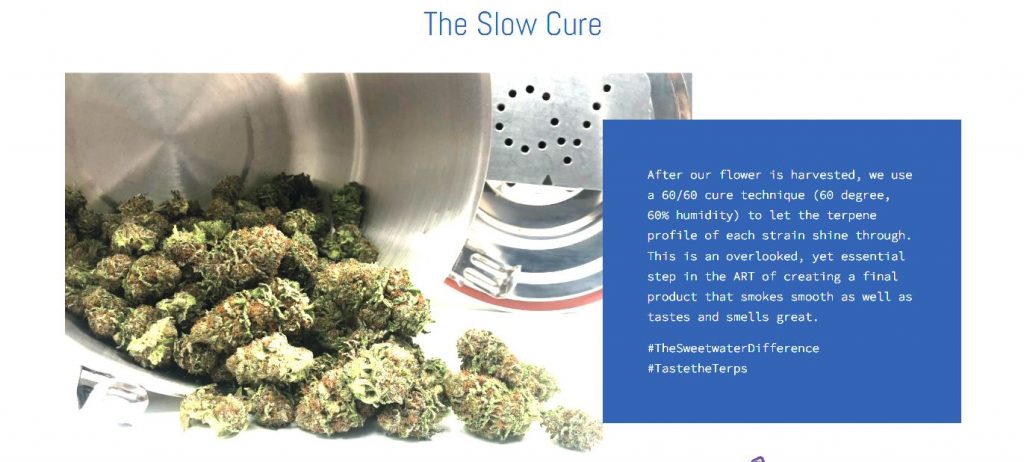
One of the defining features of Sweetwater Farms cannabis is the curing process. After harvest, the company uses a slow curing method designed to protect the plant’s terpene content and maintain a smooth smoking experience. Temperature and humidity are carefully controlled so that the flower dries gradually without degrading aromatic compounds. This process helps preserve the unique scents and flavors associated with each strain.
Sweetwater Farms produces a wide variety of cannabis strains that can be found in dispensaries throughout Washington State. These strains range from uplifting sativa-dominant varieties to deeply relaxing indica cultivars. One example is Candyland, a sativa-leaning strain known for sweet and floral aromas. Terpene profiles in this strain often include caryophyllene, which contributes a slightly spicy or hoppy scent and is commonly associated with energizing cannabis varieties. Candyland has become a popular choice among consumers seeking a more cerebral and uplifting cannabis experience.

Another well-known Sweetwater Farms strain is Primus, an indica-dominant cultivar that provides a very different effect profile compared to Candyland. Primus is associated with relaxing body effects and typically contains terpene profiles rich in myrcene, which is often linked with earthy aromas and sedating characteristics. Because of these properties, indica-dominant strains like Primus are frequently selected by cannabis consumers looking for evening use or deeper relaxation.
Huckleberry Pie is another strain commonly associated with the Sweetwater Farms brand. This indica-leaning cultivar is known for fruity, berry-like flavors and calming body effects. Like many craft cannabis strains, it reflects the importance of terpene preservation during cultivation and curing. The flavor profile and aromatic complexity that come from these terpenes are one reason many dispensary shoppers look specifically for craft producers like Sweetwater Farms rather than mass-produced flower.
Beyond individual strains, Sweetwater Farms focuses on maintaining consistent cultivation standards across its product line. The farm emphasizes organic inputs and natural nutrient systems instead of synthetic fertilizers. Compost teas and microbial activity in the soil help deliver nutrients to the plants in a more natural way, creating a living ecosystem around the root structure. This approach is intended to promote stronger plant development and richer terpene production while minimizing chemical inputs.
For consumers exploring a dispensary menu in Washington, Sweetwater Farms represents a good example of how craft cultivation continues to shape the legal cannabis landscape. By combining traditional growing methods with modern regulatory standards, producers like Sweetwater Farms demonstrate how cannabis can be cultivated with both quality and sustainability in mind.
Sources
https://www.sweetwaterfarmsmj.com/about-us
https://www.leafly.com/brands/sweetwater-farms
https://seattlehashtag.com/blog/2021/3/17/know-your-grower-sweetwater-farms
https://seattlehashtag.com/blog/sweetwater-farms-a-religious-experience
https://www.hwy420.xyz/brands/sweetwater-farms/
https://www.topshelfdata.com/wa/cheney/sweetwater-farms